

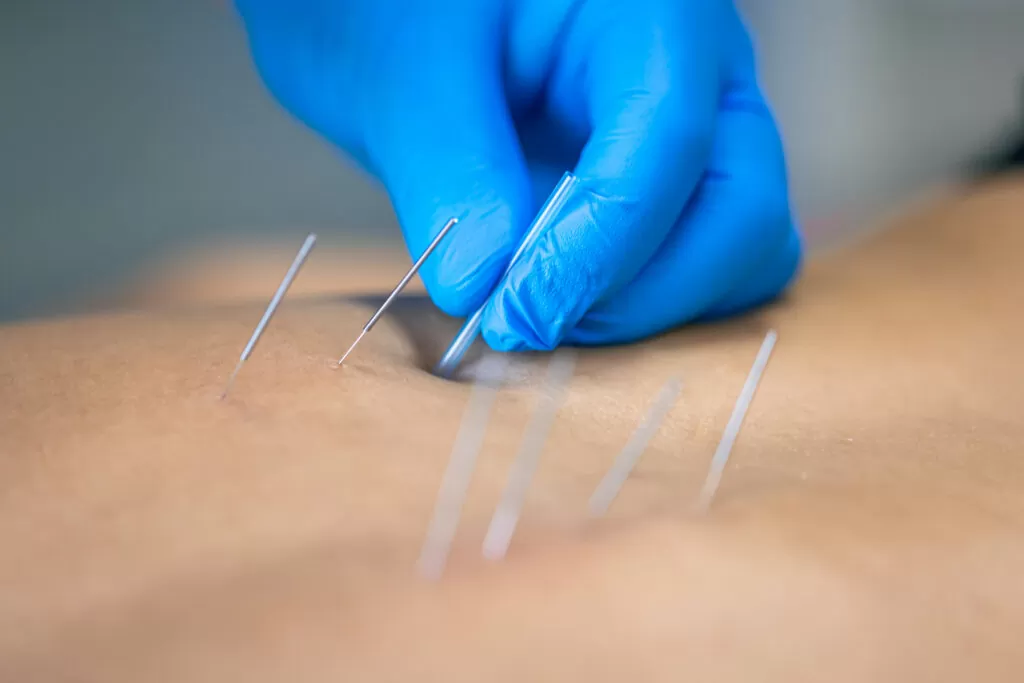
Dry needling is a therapeutic technique used by physical therapists to address muscle pain, tightness, and restricted movement. It involves inserting very thin, sterile needles directly into trigger points—those tight “knots” in your muscles that cause discomfort and limit your mobility. Unlike injections, these needles don’t deliver medication. Instead, the careful insertion of the needle stimulates the muscle, increases blood flow, and encourages your body’s natural healing response.
How Does Dry Needling Work?
First, a physical therapist identifies a trigger point or a tight band of muscle. They then insert the very fine needle right into the trigger point. The needle is so fine that the only sensation may be a slight pricking feeling as the needle first passes through the skin. The muscle area being treated may react with a brief cramp. Most people find the sensations quite tolerable.
This process helps disrupt the cycle of pain and tightness by causing the muscle to twitch and then release. Increased blood flow that occurs as the muscle relaxes flushes out the body’s own chemicals that contribute to pain, while the body also releases its natural painkillers called endorphins.
The first day or so after treatment, muscles may be sore, similar to the way they can be sore after a deep massage. After a couple of days, the benefits are seen in the form of less pain and better mobility.
What’s the Difference Between Dry Needling and Acupuncture?
While both dry needling and acupuncture have some similarities, their approaches and philosophies are quite different. Dry needling is derived from a Western medicine approach to resolving musculoskeletal issues by directly treating trigger points and tight muscles.
Acupuncture is based on traditional Chinese medicine and aims to restore the body’s energy flow (qi) by inserting needles along specific patterns of lines connected to various organ systems. In dry needling, the needle goes directly into the tight area of muscle causing the problem, while acupuncture targets precisely-mapped points related to overall wellness or particular health conditions.
What Benefits Can You Receive from Dry Needling?
A physical therapist trained in dry needling can provide these types of relief and recovery:
- Healing of muscle knots and restoration of muscle function
- Better range of motion and flexibility
- Faster recovery from accidents or overuse injuries
- Accelerated results from other physical therapy treatments
Physical therapists pursue specialized training in dry needling so they can offer their patients another effective option for pain management and functional improvement.
Conditions That May Improve with Dry Needling
Dry needling can be beneficial for a wide range of musculoskeletal conditions, including:
- Chronic muscle tightness or “knots”
- Neck, back, and shoulder pain
- Headaches and migraines
- Tendonitis in the elbow, shoulder, knee or heel
- Sciatica and nerve-related pain
- Sports, accidental or overuse injuries
- Limited joint mobility and stiffness
Find Out What Dry Needling Can Do for You!
The physical therapists at Rebound Physical Therapy can help you understand the benefits you can receive from this therapy. If you’re curious about whether dry needling could help you, contact us today. We can tell you if this innovative technique is the right addition to your recovery plan.