

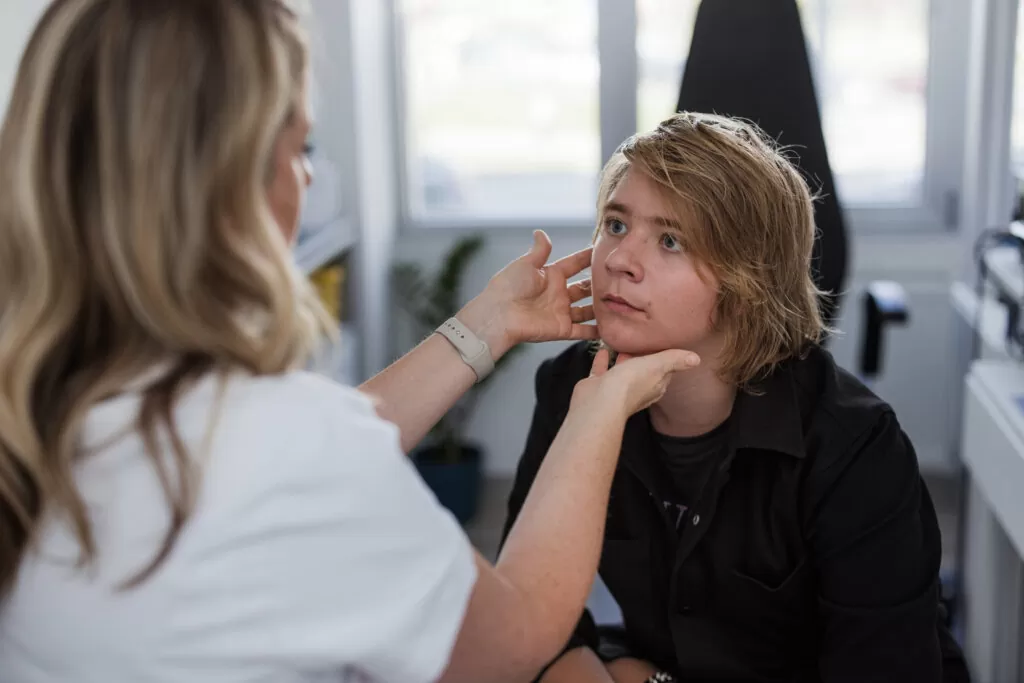
Sometimes, when your head or body experiences a sudden impact during a sports game, car accident, fall, or something similar, your brain can move around just enough in your skull to cause what we call a concussion.
A concussion is a mild traumatic brain injury that can temporarily change how your brain works, leading to short- or long-lasting symptoms that range from fatigue to confusion. While that may seem unsettling at first, these symptoms are often your body’s way of slowing you down so it has more energy to recover. Occasionally, that healing process can also affect how you process information and communicate in your day-to-day responsibilities and conversations.
How a Concussion Can Affect Your Thinking and Communication Skills
When your brain bumps around a little too much during an accident, you may end up with a concussion that temporarily affects how you think and communicate. Here is a quick breakdown of what that looks like:
- Thinking Skills: After a concussion, your brain changes how it works while you heal — which can sometimes affect how you think. Thinking struggles can include challenges with processing, memorizing, concentrating, problem-solving, and more.
- Communication Skills: As you recover, you may also notice changes in how you prepare to talk and how you speak. Communication challenges can include difficulties when recalling words while communicating (“word-finding”), keeping up with conversations, expressing yourself, and more.
How to Spot Processing and Speaking Changes After a Concussion
Starting to think you (or a loved one) has lingering symptoms from a concussion? Here are some common indicators that speech therapy could help:
- Thinking and talking slower than you usually do
- Easily losing your train of thought while communicating
- Having a hard time concentrating during conversations
- Struggling to find the right words while speaking or writing
- Preferring to isolate rather than socialize due to fatigue
How Speech Therapy Supports Concussion Recovery
Speech therapy supports growth in many areas of life, but this is commonly a primary focus: help people learn techniques to strengthen communication skills, such as processing information, organizing sentences, and using oral motor abilities for clear speech.
To support concussion recovery, a speech therapist facilitates clinical sessions to practice thinking and communication techniques, assigns homework to reinforce progress, and creates guidelines to sustain results.
Here are two areas that may be the focus of your recovery sessions:
- Thinking Skills: Focusing, processing, planning, organizing, problem-solving, decision-making, or memorizing
- Communication Skills: Word-finding, understanding written or spoken information, or expressing thoughts and questions
When working with a speech therapist, these are some likely outcomes:
- Processing information, forming thoughts, and speaking at a faster pace
- Maintaining your train of thought more easily while communicating
- Staying present and attentive during conversations
- Recalling the right words while talking and writing
- Having more energy and confidence in social settings
Call Rebound Today for a Free Speech Screening
Considering speech therapy for concussion recovery? Get started by calling our Rebound team today at (785) 367-3082 to schedule your free speech screening. Our speech therapists will provide expert guidance, helping you restore your communication skills.
Tags: Therapy, Speech, concussion