
At Rebound Physical Therapy, we’re dedicated to returning our patients and clients to an active and healthy lifestyle. Today, we’ll be talking about balance and aging.
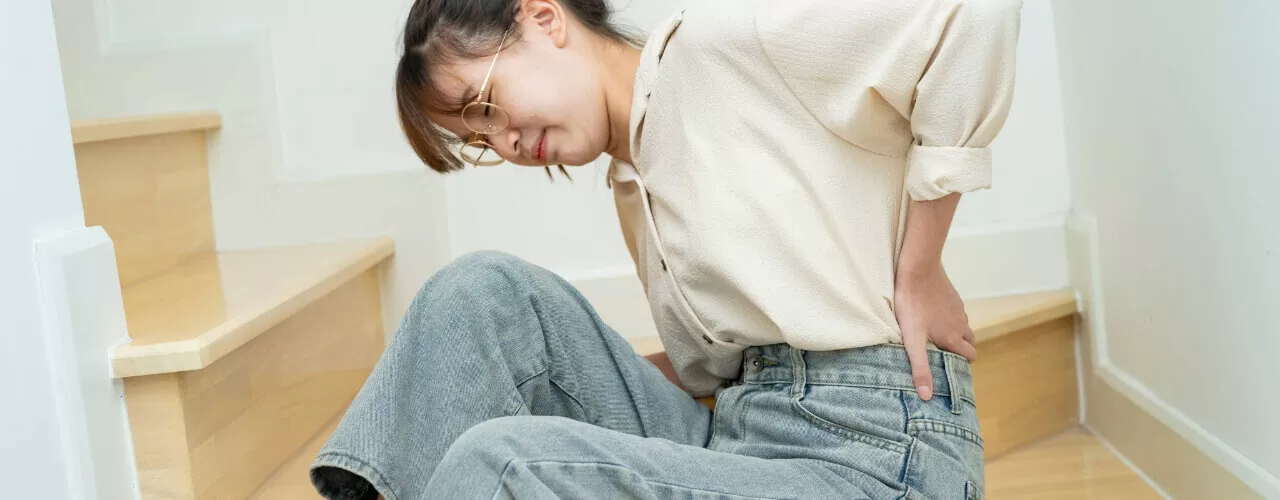
Balance trouble is one of the more common conditions that we see here in the clinic. Usually, it’s because these patients have experienced:
- Falls
- Near falls, where people are starting to trip
- Muscle weakness
- Decreased mobility
- Walking with a cane or a walker
The Three Areas of Balance
There are three areas that affect your balance: the eyes, the inner ear, and the sensation of touch. These three areas work together to help you balance. If any one of those systems has a dysfunction or is reduced, it can affect the other two systems, and then you may start having balance problems.
1. Eyes
The eyes give us information about depth perception. They give us information about vertical alignment. So, any time our vision is impaired, that can affect how we’re walking and how we move.
2. Inner Ears
The inner ear system is our main balance center. There are little sensors in the inner ear that detect rotational movement (side to side), up and down movements, as well as walking forward and backward. This system gives you information about what’s going on in space.
3. Sensation of Touch
The sensation of touch relies on your feet to give you a lot of information when you’re walking or standing. It’s especially helpful if you’re walking on uneven surfaces. The sensation of touch gives you a lot of information.
How These Balance Systems Work Together
The information from your eyes, inner ear system, and sensation of touch combine and get sent to your brain. Your brain processes all this information, then it sends information back out to respond to any changes.
If you’re walking and you lose your balance, or if you’re walking and you end up on an uneven surface, your brain has to be able to respond quickly to correct that imbalance.
How Physical Therapy Improves Balance
When we see patients who have an imbalance issue come to our clinic, we are first going to look at ways of treating their inner ear system. We’re also going to examine what information is coming from their feet.
Checking the Inner Ear System
We may put someone in a position where they have to stand with their feet shoulder-width apart (or closer than that) and ask them to turn their head side to side. We may also ask them to close their eyes.
When we do that, we’re taking away one of those components of the balance system and making the other two components work better. If we close our eyes, we’re left with the inner ear system and the sensation of touch. By doing this, we can challenge and play with the systems to improve the ability of the remaining two systems to work.
Checking the Sensation of Touch
We can put someone on a cushy foam floor, so it’s like they’re standing outside on grass or an uneven surface. Once you’ve taken away the information that comes from your feet, you’re left with the inner ear system and the eyes.
If we were to take away the eyes in that setup, then we’d be left with the inner ear system. So now your inner ear system has to do most of the work. Alternating these activities is how we can train the different systems that we use for balance.
Can I Improve My Balance with At-Home Exercises?
One of the exercises that I’d have people do at home to start with is:
- Start with your feet either shoulder-width apart or all the way together.
- Cross your arms across your chest (so you can’t use them to balance as a tightrope walker does).
- Stand there and just maintain balance. Avoid swaying back and forth or side to side, just stand there nice and still.
- Once you’re maintaining balance in that position, then we’re going to add head movements to it, which may cause you to drift one way or the other.
- Turn your head to the right and pause.
- Turn your head to the left and pause.
The next level of difficulty would be to close your eyes. Standing with your eyes closed, you’re going to really feel what’s going on with your feet and legs because we’re taking away your visual awareness of where you’re at in space. And then with our eyes closed, we can continue head movements to the right and left to increase the difficulty. That’s a simple thing you can try at home.
A Note on At-Home Balance Exercises
If you are going to do the above exercises at home, I would recommend you put a sturdy chair behind you or stand in front of a countertop that you can grab quickly if you need to. This way, if you lose your balance, you can catch yourself and avoid a bad fall. But try not to touch the counter or chair during the exercises because again, touch gives you balance information.
Let Rebound Physical Therapy Get You Back in Action
If you or someone you know has any balance problems and feels like benefiting from talking with one of our physical therapists, schedule a free screening at our clinic in Topeka, KS. You can come in, talk with one of our expert therapists, and learn a little bit more about what may be going on with your balance.
If you know that you need a balance evaluation, give us a call at (785) 271-5533 and we’ll get you set up for an evaluation.
Tags: Physical Therapy, Rebound Physical Therapy, Physical Therapist, Balance, Balance Tips, At-home Exercises, Balance Improvement